


1. Introduction
2. Research Approach
3. Mechanical Testing Procedure
4. Thermal Stress Computation of Asphalt Mixture
5. Comparison of Thermal Stress Results from BBR Mixture and IDT Mixture Creep Tests
6. Conclusions and Recommendations
1. Introduction
Low temperature cracking is one of serious distresses in asphalt pavements built especially in cold regions (Moon, 2010, 2012). As temperature drops to extreme values, significant tensile stresses develop in the upper layers of the asphalt pavement structure, and ultimately lead to the initiation and propagation of cracks (Moon, 2010, 2012). Severe transverse cracks form at regular intervals on the pavement surface, and if left unrepaired, they gradually widen and allow water and moisture to infiltrate and penetrate into the entire pavement structure and finally, accelerated to total pavement failure (Marasteanu et al., 2009). For this reason, thermal stresses represent a critical component of the computation module used to predict low temperature performance of asphalt pavement in the current AASHTOWare Pavement design guide (AASHTO, 2025).
This thermal stress of asphalt material is computed by means of low temperature creep testing work (Anderson and Marasteanu, 1999; Moon, 2010, 2012).
For asphalt binders, creep tests are performed with Bending Beam Rheometer (BBR); the results are used as part of the current Performance Grade (PG) specification (AASHTO, 2005) at low temperature. For asphalt mixtures, creep tests are performed considering the Indirect Tension (IDT) method (AASHTO, 2003). Moreover, it was presented that asphalt mixture creep tests also can be performed on thin beams using the same BBR equipment currently used for asphalt binders (Marasteanu et al., 2009) named: BBR mixture creep test.
In this paper, thermal stress values are calculated using two different experimental approaches: BBR and IDT mixture creep data. The results are compared graphically and conclusions and further recommendations are provided.
2. Research Approach
Total four different asphalt mixture material samples were prepared for BBR and IDT testing works from MnROAD (Johnson et al., 2009). Some of asphalt materials were mixed with Warm Mix Asphalt (WMA) agent, Reclaimed Asphalt Pavement (RAP) and other agents. Information of prepared material is provided in Table 1 (Marasteanu, 2007; Johnson et al., 2009).
Table 1.
Summary of prepared asphalt mixtures in this paper
| Mixture ID | Mn/DOT Road Cell # | Asphalt binder grade | RAP&RAS Content |
| A | 2 | PG 78-28 | None |
| E | 16 | PG 58-34 WMA | RAP up to 20% |
| G | 20 | PG 58-28 | RAP up to 30% |
| K | 5 | PG 58-28 | 5% shingles |
It needs to be mentioned that asphalt mixtures E and G contain RAP: acquired from northern Minnesota territory, respectively (i.e. mixture E contains asphalt binder for Warm Mix Asphalt production). Moreover, mixture K contains other recycling material called: roof-top manufacture waste shingles. There materials are evaluated and tested for constructing sustainable pavement technology in asphalt material area.
3. Mechanical Testing Procedure
The BBR creep test was performed on thin asphalt mixture beams (i.e. 102.0 mm × 12.7 mm × 6.25 mm) according to the specification described elsewhere (Marasteanu et al., 2009). Similarly to the current BBR AASHTO specification for asphalt binders (AASHTO, 2005). In this BBR test, the mid-span deflection: 𝛿(t), is measured for the entire duration of the test, and it is used to calculate the creep stiffness S(t) and the corresponding m-value. Since mixtures are much stiffer than binders, the applied load was much higher than the load used to test binders (i.e. 980 mN ± 50 mN). To better match the IDT creep data, loading time was set to 1000 s rather than 240 s. The BBR mixture tests were performed at two temperatures: (PG+10) - 12°C and PG+10°C. In BBR mixture test, all prepared specimens were conditioned at the test temperature for 1 hour prior to testing. Then three specimens were tested at each temperature; therefore, six specimens were tested per each mixture based on the recommended references (Anderson and Marasteanu, 1999; Moon, 2010).
The IDT mixture creep tests were performed according to AASHTO Standard T 322-03 (2002). In IDT mixture test, four Linear Variable Differential Transducers (LVDTs) are used to measure the vertical and horizontal creep displacements for 1000 ± 2.5 seconds on a cylindrical specimen 150mm in diameter and 38mm thick. The testing temperatures were set the same as for BBR mixture testing in this research.
It needs to be mentioned that not many pavement agencies can use IDT testing procedure due to high price of testing equipment (e.g. frame, sensors and liquid nitrogen preparation etc.) and sophisticated testing procedure. However, the BBR testing method can provide various advantages such as: low testing equipment price, simple process for testing specimen preparation and wide usage (e.g. can be tested both for binder and mixture, respectively).
Therefore, the BBR mixture test can be a successful SPT for evlating low temperature performance of given asphalt material if similar thermal stress computation results can be derived from BBR test compared to the conventional IDT test.
All the information of BBR and IDT tests are shown in Figs. 1, 2 and Table 2, respectively.
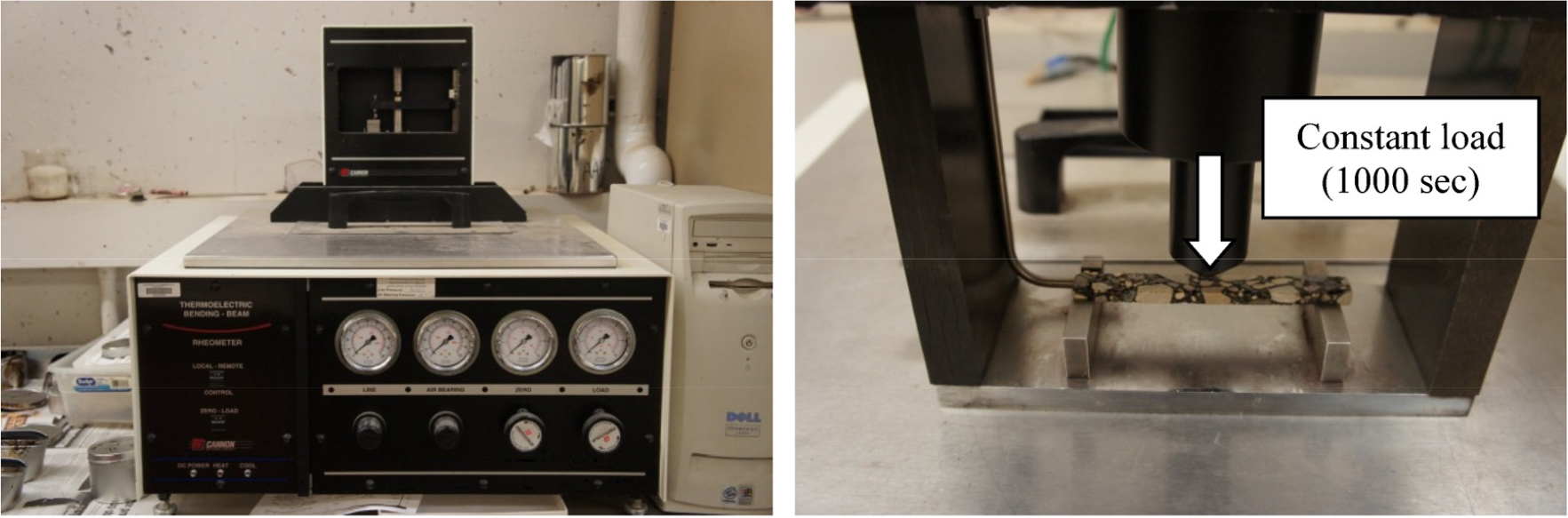
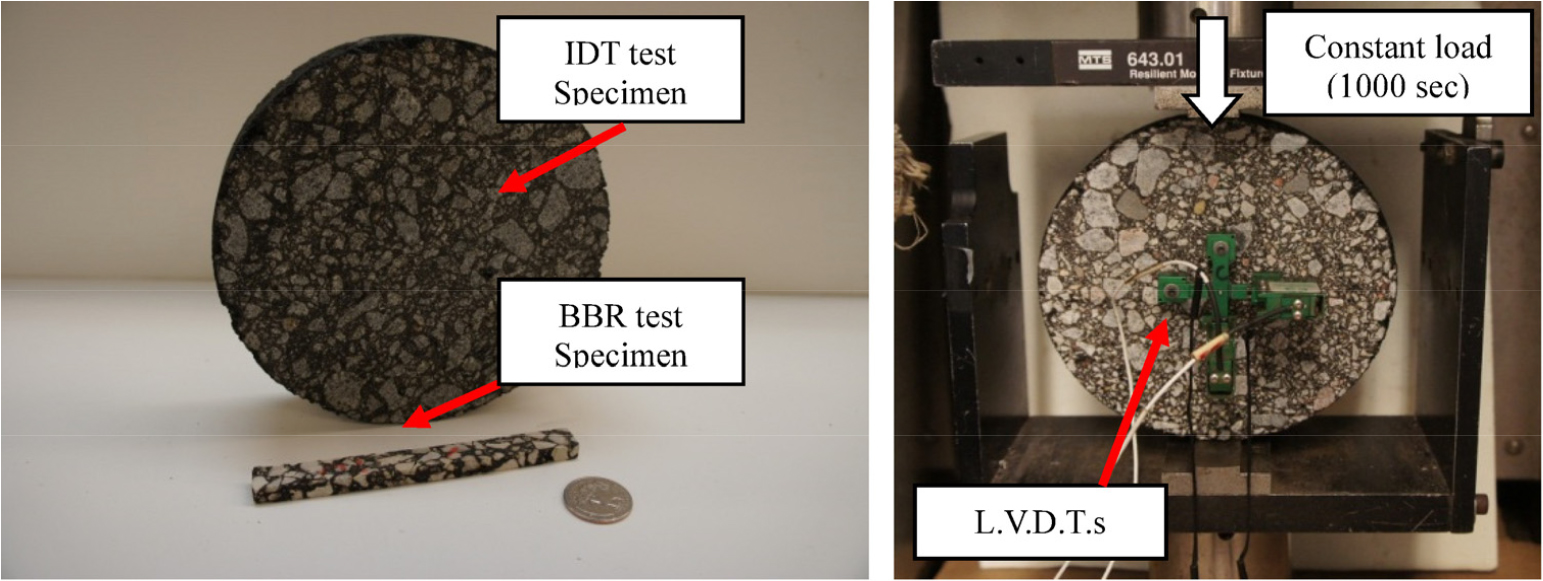
Table 2.
Summary of BBR and IDT mixture testing
4. Thermal Stress Computation of Asphalt Mixture
As mentioned previously, thermal stress is one of key factors in current AASHTOWare Pavement design guide for computing actual performance of asphalt pavement (2005). Generally, thermal stress develops in a restrained asphalt pavement layer which can be represented as an uniaxial viscoelastic beam. Thermal stress can be computed the following equation:
= time dependent stress, and = relaxation modulus
The strain, 𝜀, is re-expressed as:
Where:
𝛼 = coefficient of thermal expansion or contraction,
= temperature change rate;
The reduced time (𝜁) is expressed as:
In Eq. (3),
= time (sec), = shift factor and 𝜁 = relaxation time
Finally, the thermal stress, 𝜎(𝜁) can be computed as follows:
In this research, the following procedure was used to compute 𝜎(𝜁):
1. Creep compliance, D(t), was obtained from BBR and IDT testing.
2. E(t) was calculated from D(t) using Hopkins and Hamming algorithm (1957).
3. E(t) master curve was generated using CAM model (Anderson and Marasteanu, 1999):
In Eq. (5),
= Glassy modulus (assumed 3GPa for binder and 30GPa for mixture);
tc, v and w = fitting parameters
In Eq. (6),
C1 and C2 = constant parameters, T = reference temperature, °C;
In addition, Eq. (4) and (5) were solved numerically using Gaussian quadrature with 24 Gauss points (Basu, 2002; Moon 2010, 2012).
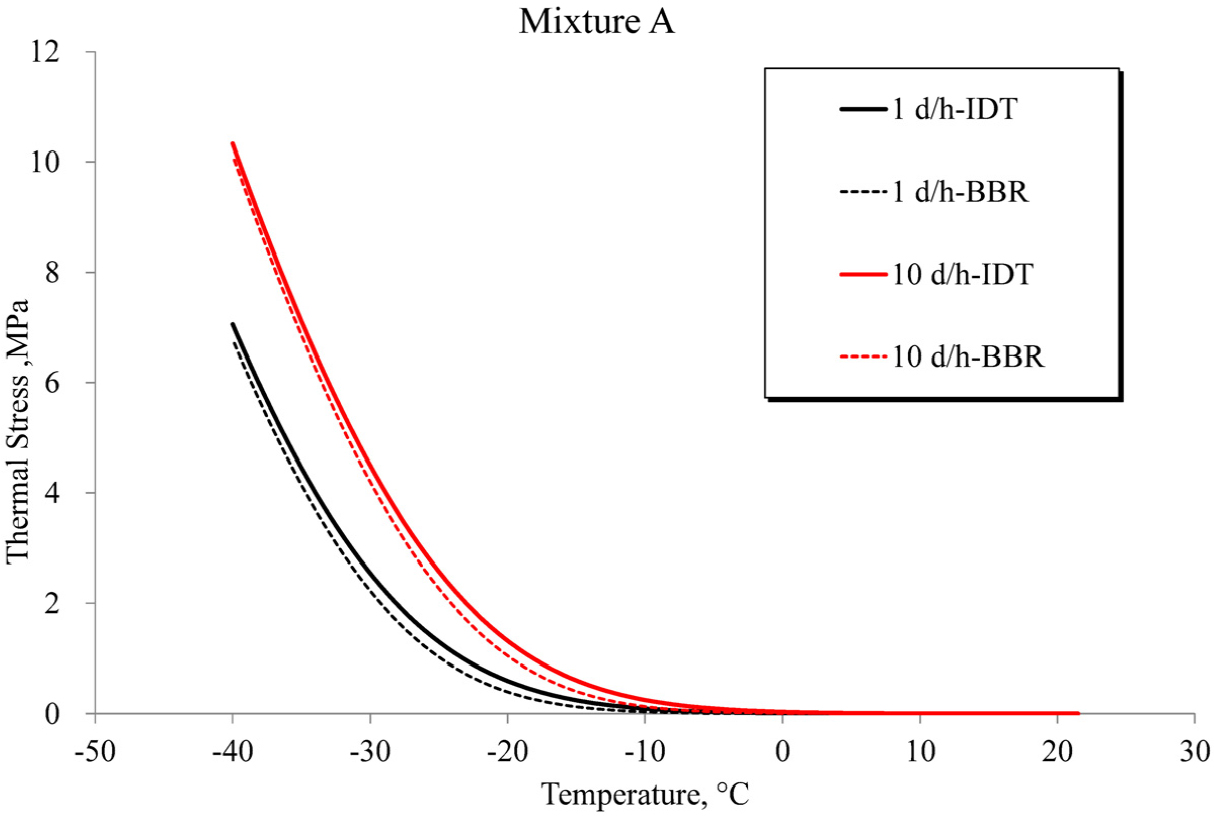
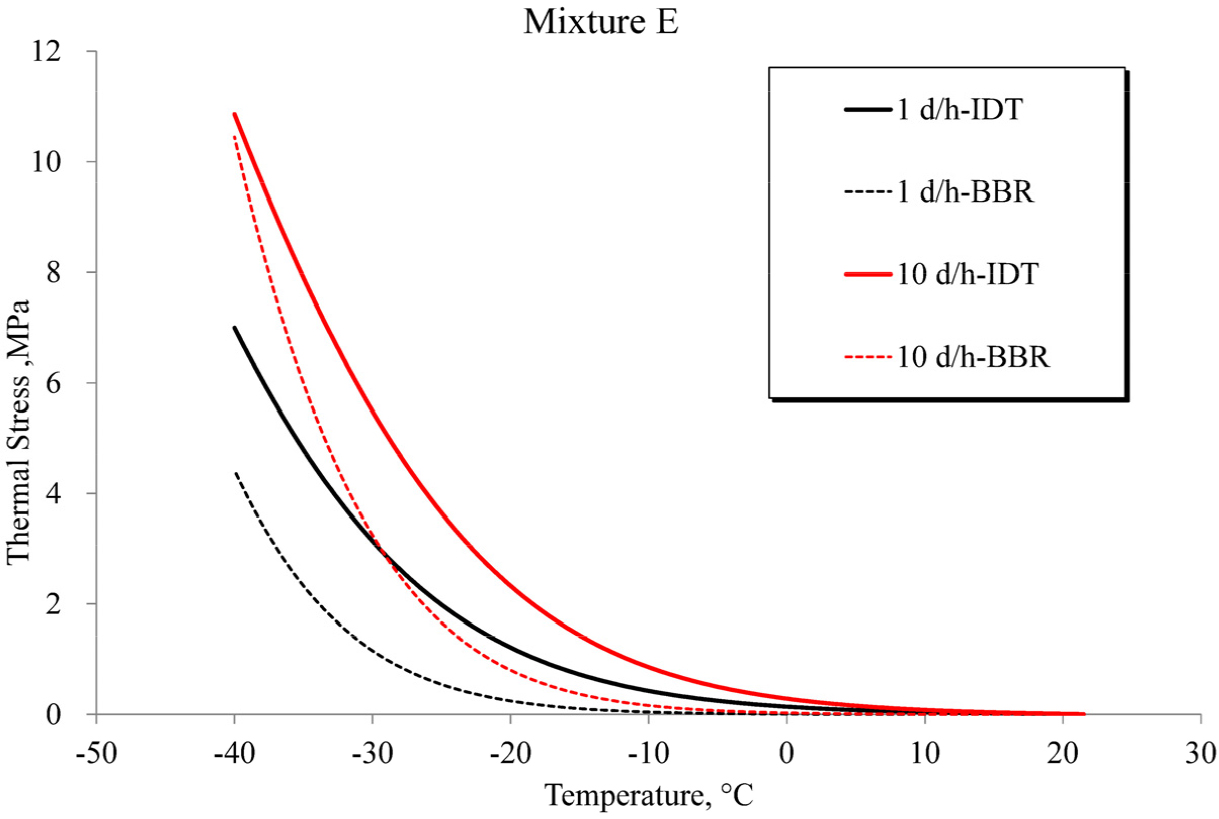
Finally, the thermal stress results (i.e. solving Eq. (4) numerically) from BBR and IDT tests were compared visually. Moreover, the values of cooling rate of asphalt binder were set as : 1 Celsius(=Degree)/hour and 10 Celsius(=Degree)/hour, respectively.
5. Comparison of Thermal Stress Results from BBR Mixture and IDT Mixture Creep Tests
All the computed results are shown in Fig. 3, 4, 5, 6, respectively.
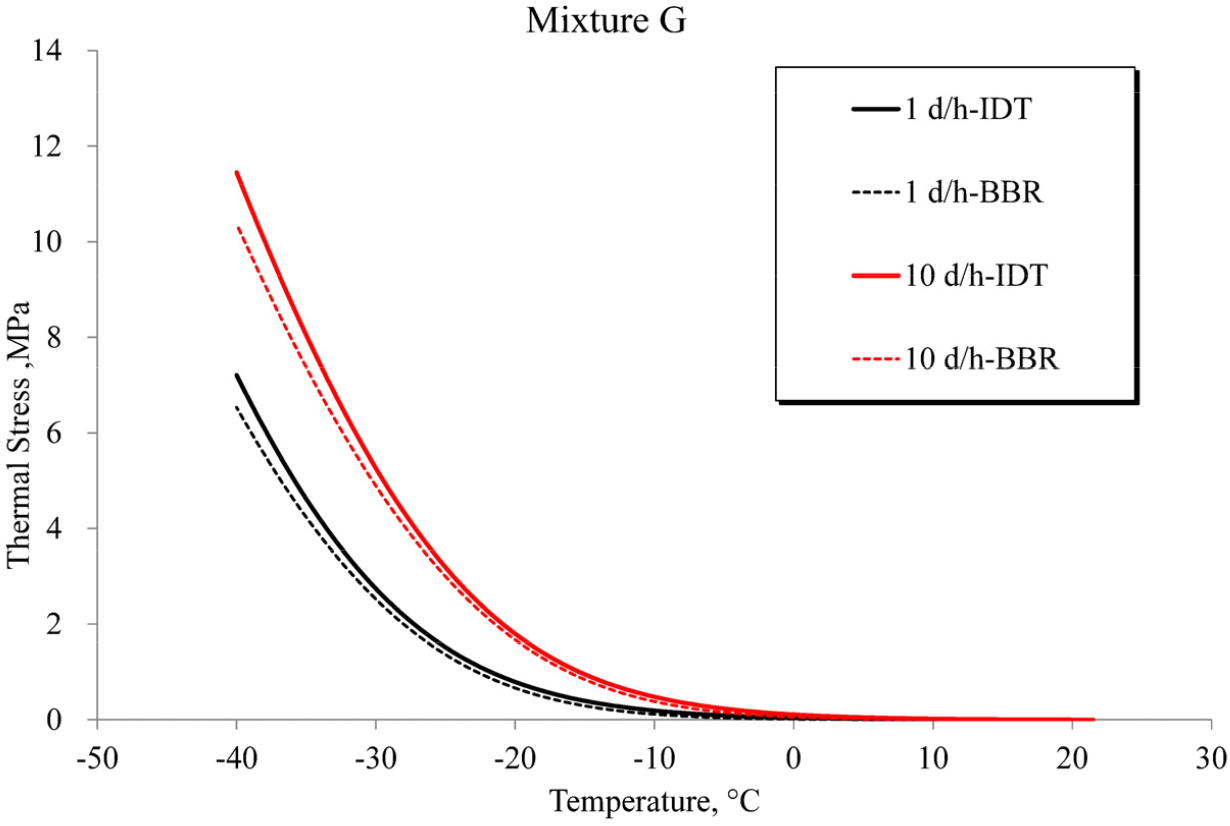
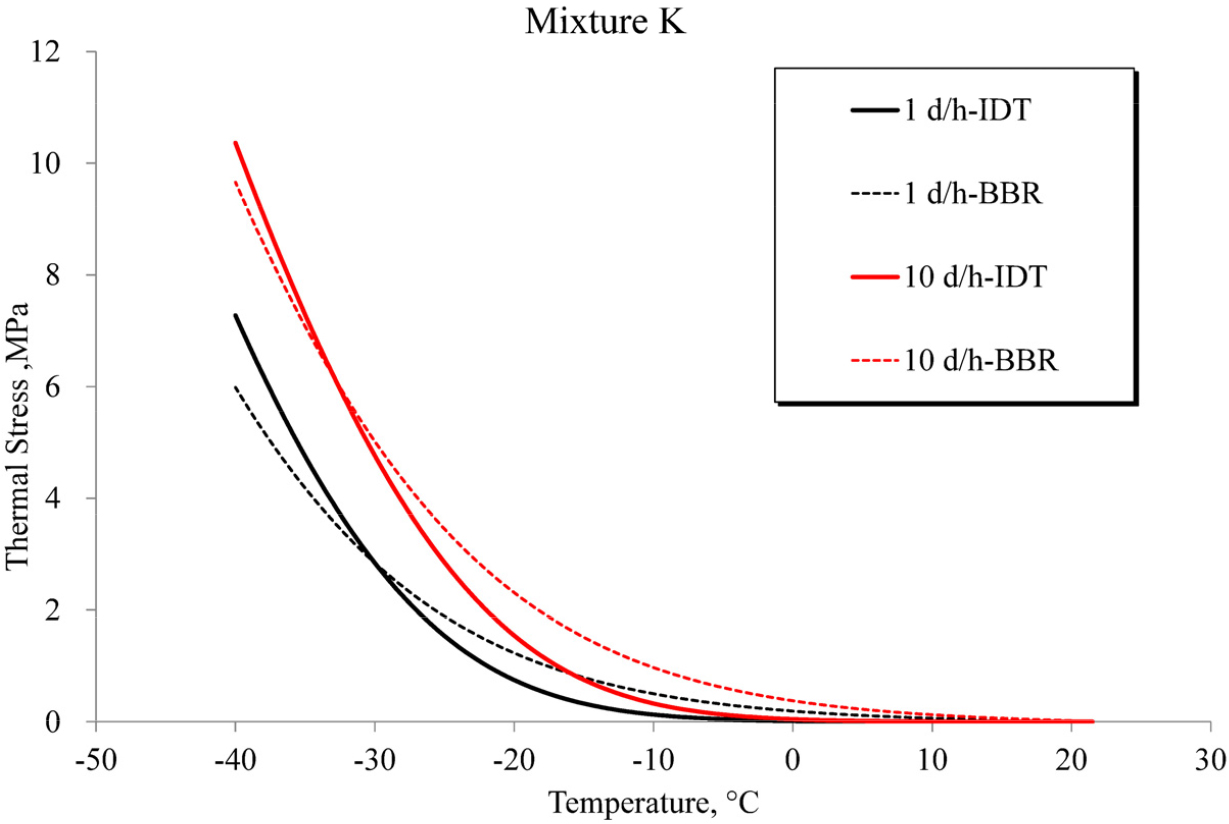
From results in Fig. 3, 4, 5, 6, some crucial findings can be derived:
For some asphalt mixtures, almost identical thermal stress computation results between BBR and IDT mixture creep testing were found (e.g. for mixtures A and G). However, for mixtures E and K, some (and/or significant) differences on thermal stress results between BBR and IDT mixture creep test were found. This means BBR mixture creep test can present the possibilities for evaluating low temperature performance of given asphalt mixture. However, the differences of computation results for other mixture (WMA and shingle mixtures) are still a challenging. More extensive research efforts are needed to further strengthen the findings in this paper.
6. Conclusions and Recommendations
The possibilities of applying BBR mixture creep test for evaluating low temperature performance of given asphalt mixtures was considered in this paper. For some mixtures, almost identical results were found however still different computation results were found for other asphalt mixtures. It can be said the possibilities for applying BBR mixture creep test could present possibilities but still many challenges are left. More extensive research efforts are recommended to further strengthen the findings as a future research.