

-
Technical Notes

-
A technical review of asphalt binder production and stiffness under changing crude oil supply conditions
원유 수급 변화에 따른 아스팔트 바인더의 생산과 강성에 관한 기술적 고찰
-
Sung Hyeon Park, Tae Soon Park, Ki Hag Kim
박성현, 박태순, 김기학
- Recently, geopolitical risks and the Iranian crisis have forced South Korean refineries to diversify their crude oil sources. Refineries claim that producing …
- Recently, geopolitical risks and the Iranian crisis have forced South Korean refineries to diversify their crude oil sources. Refineries claim that producing the stiffer AP-5 grade (Penetration 60-80) is no longer feasible due to these crude shifts, leaving them to supply only the softer AP-3 grade (Penetration 80-100). This technical note critically evaluates the relative impacts of crude oil chemical composition versus secondary refining process controls on the final stiffness and Performance Grade (PG) of asphalt binders from both pavement and refining engineering perspectives. The analysis suggests that the influx of light crude, such as U.S. shale oil, may be associated with a reduction in the asphaltene concentration in Vacuum Residue (VR), and that the current restriction on AP-5 production may be more closely associated with economic constraints and refinery profit-margin considerations than with absolute technical limitations. To resolve this supply deficit and preserve pavement durability, this paper proposes three engineering solutions executable at the refinery level: (1) Re-blending of Solvent Deasphalting (SDA) pitch, (2) Optimization of the mild air-blowing process, and (3) In-line additive masterbatch blending prior to shipping. - COLLAPSE
-
A technical review of asphalt binder production and stiffness under changing crude oil supply conditions
-
Technical Notes
-
Understanding background of development and principle of deformation strength (SD)
변형강도의 개발 배경과 원리의 이해
-
Kwang W. Kim, Sungjin Lee, Wonbae Kim
김광우, 이성진, 김원배
- This technical note was written to explain the theoretical background in developing deformation strength (SD) and principle of the equation …
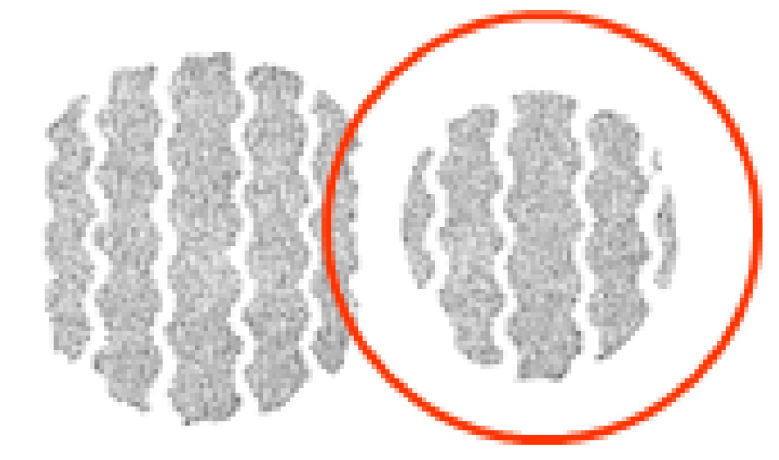
- This technical note was written to explain the theoretical background in developing deformation strength (SD) and principle of the equation for determining SD from Kim Test result. The Kim Test was developed to measure the vertical deformation (y) of asphalt concrete specimen at the peak load (P) applied by a static loading (30 mm/min) to the center of specimen heated at 60°C. The SD is the strength against deformation of the semi-plastic materials when they are failed with an apparent deformation. The main idea is to adopt y as a variable for computing SD, in addition to the failure load (P). Since the SD is calculated using two variables (y and P), the y is key variable for determining SD when Ps are identical, and it is possible to distinguish the strong material against deformation. Therefore, the originality of this invention is that, a static loading is applied locally at the top center of specimen and the SD is obtained as a function of y and P. For the case of the same P, the higher SD is obtained from the material with smaller y, unlikely to the elastic material testing, which dose not take into account for the magnitude of deformation. Since SD was found to have high correlation with rut parameters, it was adopted as a mix-design criterion of Korea Ministry of Land, Infrastructure and Transport (MOLIT). However, to apply SD more widely in asphalt pavement industry, the background and principle of SD should be more publicized to engineers. - COLLAPSE
-
Understanding background of development and principle of deformation strength (SD)
-
Scientific Paper
-
A review of research trends and technological advances in asphalt pavement maintenance in Korea (2015-2025)
국내 아스팔트 포장 유지관리 기술의 연구 동향 및 발전 방향에 대한 리뷰(2015-2025)
-
Seungyeol Oh, Hyuna Kwon
오승열, 권현아
- Asphalt pavement maintenance has become an important issue in Korea due to aging road infrastructure, increasing traffic volume, climate change, and rising …
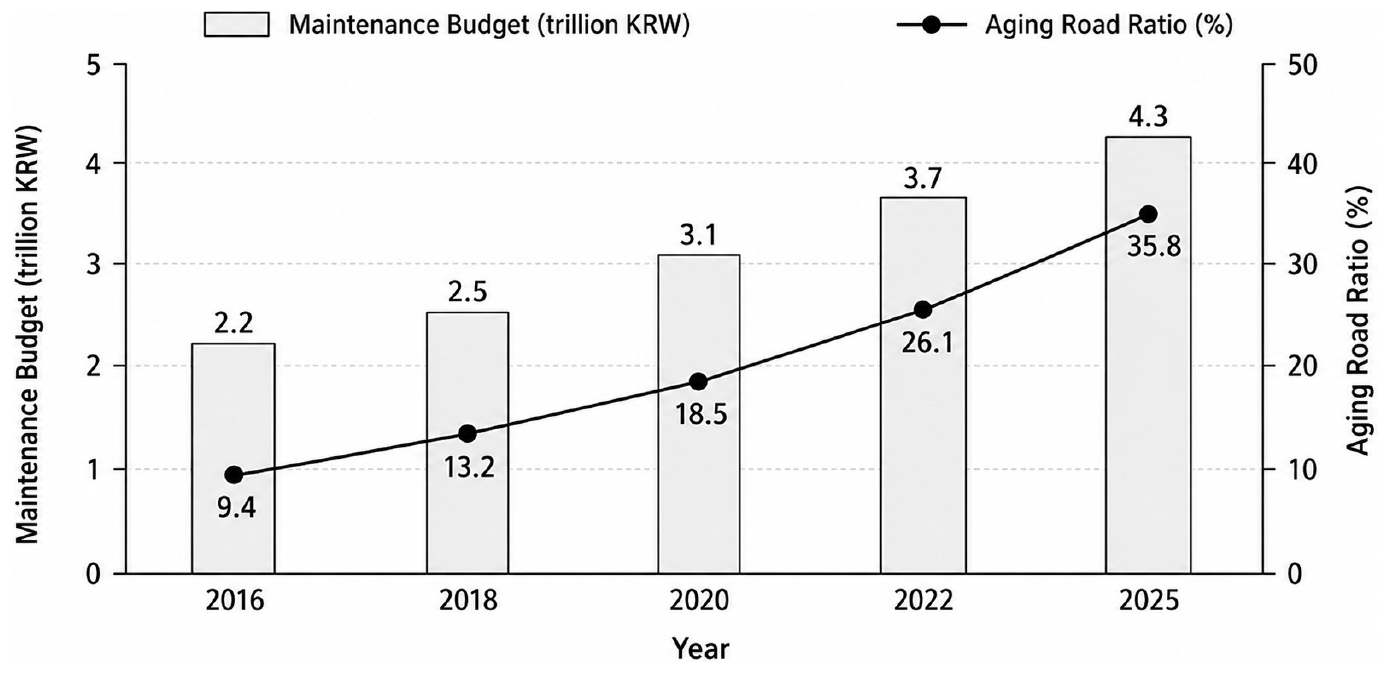
- Asphalt pavement maintenance has become an important issue in Korea due to aging road infrastructure, increasing traffic volume, climate change, and rising maintenance costs. This study reviews domestic research trends on asphalt pavement maintenance published between 2015 and 2025, focusing on studies related to pavement condition assessment, pavement management systems, preventive maintenance, functional and long-life pavement technologies, AI-based smart maintenance, and sustainable pavement materials. The analysis indicates that domestic research has gradually shifted from performance evaluation and maintenance budget estimation to overlay rehabilitation, FWD/IRI-based evaluation, recycled asphalt materials, LSTM-based prediction, GPR-based assessment, and smart maintenance systems. However, several limitations remain, including insufficient long-term performance data, fragmented maintenance databases, limited field validation, lack of standardized evaluation procedures, and weak linkage between condition assessment and maintenance decision-making. Therefore, future research should focus on integrated maintenance databases, reliable AI-based prediction models, field validation, and smart pavement management systems. The results provide a structured overview of recent domestic research trends and suggest future directions for data-driven and sustainable asphalt pavement maintenance in Korea. - COLLAPSE
-
A review of research trends and technological advances in asphalt pavement maintenance in Korea (2015-2025)
-
Scientific Paper
- Comparison of low temperature creep performances of various asphalt mixtures by means of statistical comparison approach
- Ki Hoon Moon, Duk Su Sohn, Sung Jin Hong
- Low temperature cracking is a crucial distress in asphalt pavements built especially in Northern U.S. and Canada. As temperature drops, thermal stress …
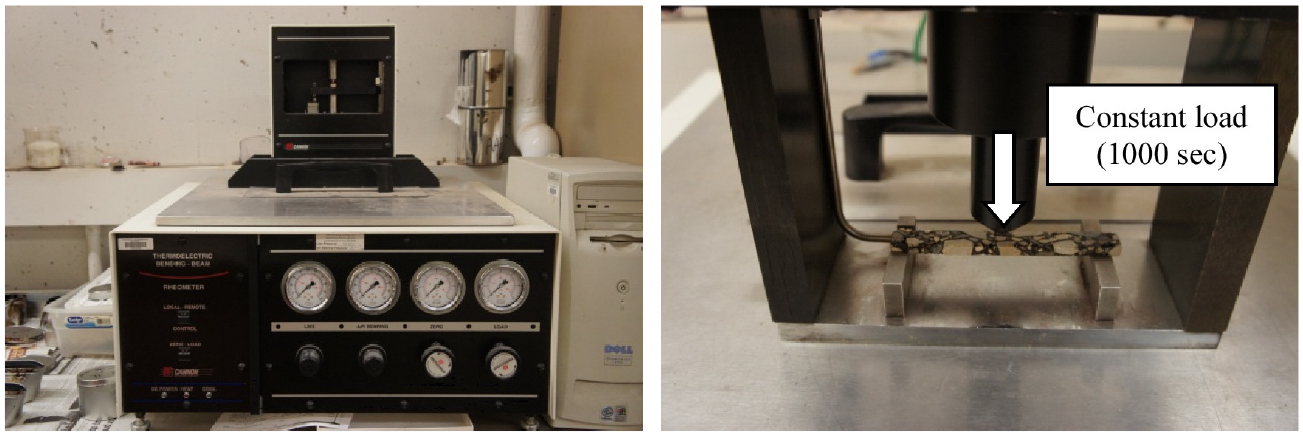
- Low temperature cracking is a crucial distress in asphalt pavements built especially in Northern U.S. and Canada. As temperature drops, thermal stress starts developing in the restrained asphalt pavement layer. If the temperature in pavement layer reaches to critical temperature level, finally low temperature cracking happens. The thermal stress can be computed by means of simple experimental approaches named: Bending Beam Rheometer (BBR) and In-Direct Tensile (IDT) mixture creep tests. In both experimental activities, the creep stiffness: S(t), and corresponding m-value can be simply computed. These two mechanical factors provide significant role in thermal stress computation procedure. In this paper, statistical and graphical analyses are performed to compare low temperature creep stiffness and corresponding m-value from various asphalt mixtures. It is found that BBR mixture testing method: a cheaper and easier testing approach compared to conventional IDT mixture testing method, can be a successful alternative for measuring low temperature properties of given asphalt mixtures. - COLLAPSE
-
Scientific Paper
-
Probability of functional failure using deformation strength (SD) of polymer-modified asphalt concretes
개질 아스팔트 혼합물의 변형강도를 이용한 기능성 파괴 확률 연구
-
Wonbae Kim, Byeong-Ho Lee, Kyong K. Yun, Kwang W. Kim
김원배, 이병호, 윤경구, 김광우
- The deformation strength (SD) was developed to measure the deformation resistance of the asphalt concrete material at high temperature (60°C). …
- The deformation strength (SD) was developed to measure the deformation resistance of the asphalt concrete material at high temperature (60°C). The static pressure is applied through a loading head to create a load-induced spot deformation which is similar to the one created by a static wheel loading. The SD is one of mix-design criteria for asphalt mixture in Korea. The minimum (critical) values of SD for surface course of 2nd class road pavement and of 1st class highway pavement are 3.2 MPa and 4.25 MPa, respectively, which were set forth by Ministry of Land, Infrastructure and Transport, Republic of Korea. In this study, a total of 30 random field samples of polymer-modified asphalt (PMA: PG76-22) mixtures for dense-graded surface course were collected from nation-wide field sites. Three specimens with 100 mm in diameter were prepared using a gyratory compactor to measure SD for each site mix. The statistical data analysis was performed to estimate population mean (μ) and standard deviation (σ). Statistical data show that the SD mean of 4.93 MPa satisfied the mix-design criterion of 4.25 MPa. The coefficient of variation (Vc) of modified mixes was 9.31%, which is known to be lower level than that of normal mixes. The chi-square goodness of fit test was performed to determine how well the sample data distribution fits to normal distribution theoretically. As a result, the SD data were found to be fit to the normal distribution at α = 0.05. The process means (SD) for each functional failure (inducing rutting) level was suggested for field strength quality control. The suggested process means for PG76-22 mixtures were 4.83, 5.0 and 5.43 MPa for the probability of functional failure (Pf) of 0.1, 0.05 and 0.01, respectively. In stead of using mix-design criterion SD value (4.25 MPa), if those values of SD are applied to the field mix quality control, the rutting cause will be significantly reduced on the pavement. - COLLAPSE
-
Probability of functional failure using deformation strength (SD) of polymer-modified asphalt concretes
-
Scientific Paper
-
A multi-force-field stack design and validation framework for asphalt molecular dynamics: Part I. Theoretical background and general-purpose force-field comparison
아스팔트 분자동역학 시뮬레이션을 위한 다중 역장 스택 설계 및 검증 프레임워크: Part I. 이론적 배경과 범용 역장 비교
-
Taeyoung Yun
윤태영
- This paper is Part I of a two-part series that develops a force-field (FF) selection and validation framework for atomistic molecular dynamics …
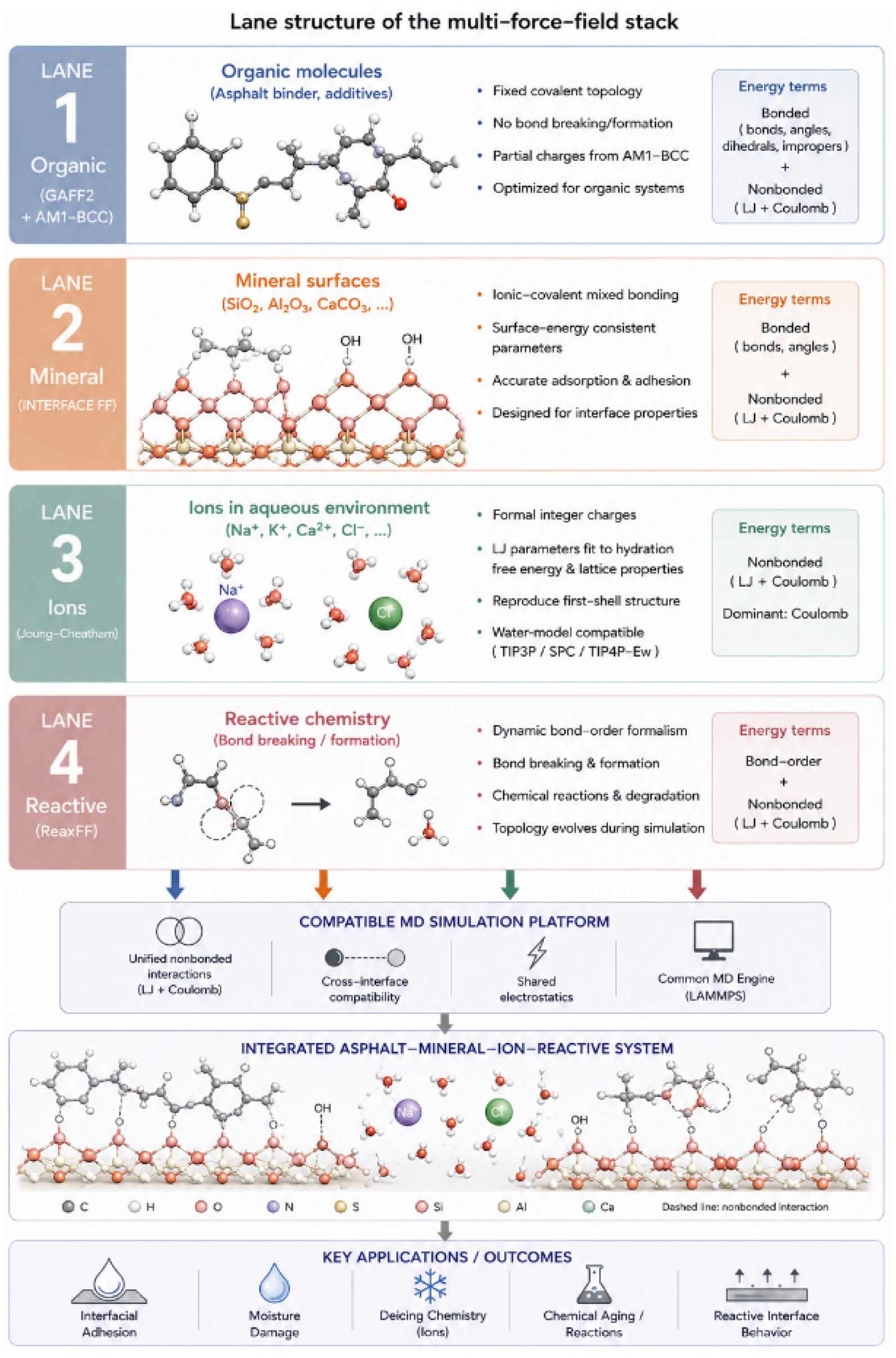
- This paper is Part I of a two-part series that develops a force-field (FF) selection and validation framework for atomistic molecular dynamics (MD) simulations of asphalt binder systems that involve SARA hydrocarbons, polymeric modifiers, mineral aggregate surfaces, and aqueous ionic environments under oxidative aging. Because no single FF rigorously covers this heterogeneity, FF requirements are derived at the intersection of two axes: a usage-environment axis (binder multi-component nature, mineral diversity, water and ions, oxidative aging) and a theory-and-methodology axis (bonded and non-bonded energy terms, mixing rules, 1-4 scaling compatibility, and long-range electrostatic management). Part I establishes the theory-and-methodology axis by systematizing the decomposition of bonded and non-bonded MD energy, the partial-charge models and reusable FF artifacts (AM1-BCC, RESP, CHELPG, CM1A/CM5, NPA), the non-bonded summation methods (cutoff, Ewald/PPPM, slab correction, and QEq), and the mixing-rule and 1-4 scaling conditions that govern multi-FF stacking. On this basis, Part I provides a comparative evaluation of the major candidate force fields (GAFF/GAFF2 + AM1-BCC, OPLS-AA/OPLS4, COMPASS/COMPASS III, AMBER ff14SB, CHARMM CGenFF, INTERFACE FF, and ReaxFF) in terms of functional form, charge scheme, mixing-rule compatibility, and primary application. The companion Part II derives the asphalt-specific FF requirements, operationalizes the resulting 3+1 lane partitioning (organic binder, mineral interface, water and ions, and reactive oxidation) into a scenario-based operating matrix, and validates the Lane 1 baseline through parity-plot comparisons of GAFF2 against commercial COMPASS III. - COLLAPSE
-
A multi-force-field stack design and validation framework for asphalt molecular dynamics: Part I. Theoretical background and general-purpose force-field comparison
-
Scientific Paper
- Low temperature performance evaluation of various asphalt materials by means of IDT testing approach
- Ki Hoon Moon
- Low temperature cracking is one of the serious asphalt pavement distresses. When temperature in pavement layer drops dramatically, thermal stress starts developing. …
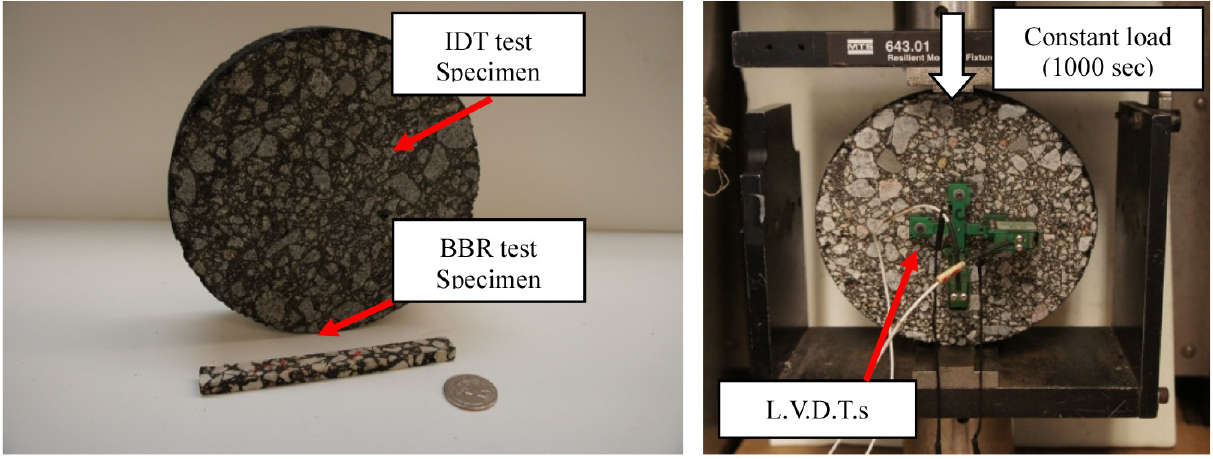
- Low temperature cracking is one of the serious asphalt pavement distresses. When temperature in pavement layer drops dramatically, thermal stress starts developing. Then the temperature in pavement layer reaches to significant level, finally the low temperature cracking happens. To evaluate the effect thermal cracking on asphalt pavement layer, computation of thermal stress is essential. This thermal stress can be computed by means of simple performance mechanical test called: low temperature creep testing approach. In this test, creep stiffness can be measured then computed. Then thermal stress can be computed with some mathematical computation process along with numerical analysis procedure. Two testing methods: BBR(Bending Beam Rheometer) and IDT(Indirect Tensile) mixture creep test, can be used for measuring creep stiffness at low temperature condition widely. The BBR method is relatively cheaper and easier for testing work compared to the conventional IDT method. However, the feasibility of applying BBR test as an alternative is still questionable. In this paper, the low temperature performance of various asphalt mixtures was evaluated by means of IDT approach. It is found that thermal stress value can be used for successful alternatives for measuring low temperature performance of asphalt material. - COLLAPSE
-
Scientific Paper
-
A study on the indirect cost benefits of foamed warm mix asphalt for green pavements in Indonesia
인도네시아 그린 도로 포장 적용을 위한 기포 중온 아스팔트 도입의 간접 비용 효과 분석
-
Il Hwan Kang, Kang Hun Lee, Yong Joo Kim, Sung Lin Yang, Byeong Hun Woo
강일환, 이강훈, 김용주, 양성린, 우병훈
- Pavement reconstruction under temporary lane closures causes severe traffic congestion and social delay costs. While conventional Hot Mix Asphalt (HMA) prolongs traffic …
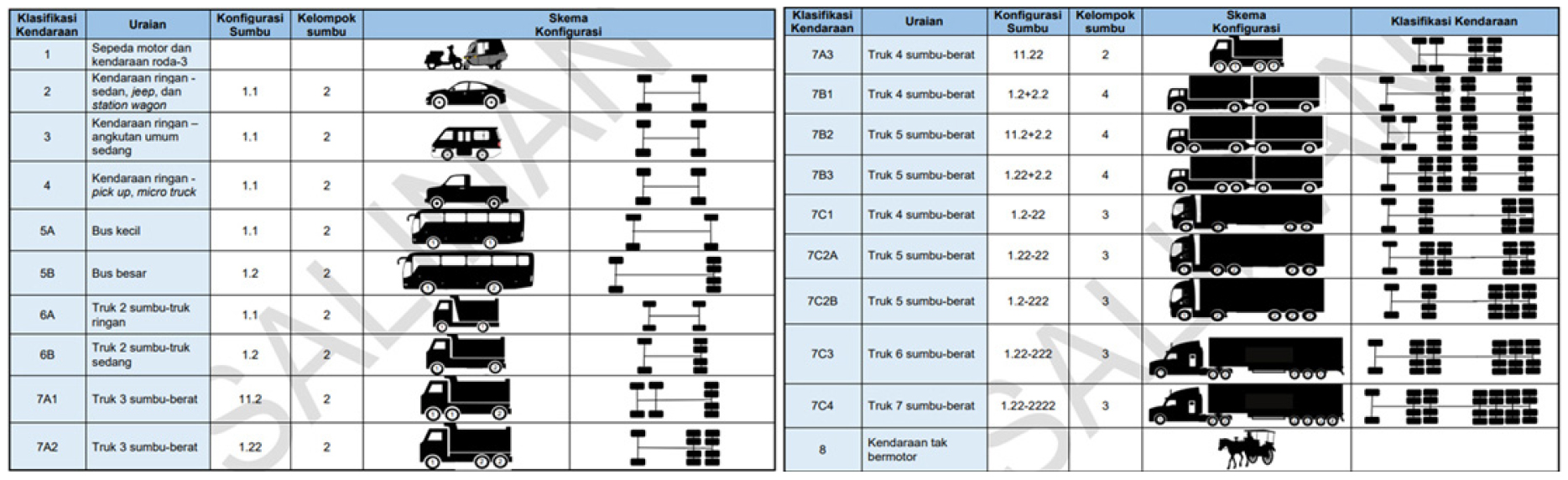
- Pavement reconstruction under temporary lane closures causes severe traffic congestion and social delay costs. While conventional Hot Mix Asphalt (HMA) prolongs traffic blockages due to extensive curing times , Foamed Warm Mix Asphalt (FWMA) allows lower construction temperatures and accelerated early traffic opening. This study quantitatively evaluates the indirect benefits—specifically carbon dioxide (CO2) emission reductions and social delay cost savings—resulting from a 1-hour reduction in construction duration provided by FWMA, utilizing realistic traffic data from the Bogor region in Indonesia.A standard geometric network model of a two-lane undivided road (2/2UD) was developed using the VISSIM microscopic traffic simulation program. Traffic composition (70% small, 20% medium, 10% large vehicles) and volume scenarios (650 and 1,300 vehicles/day) were applied based on data from the Indonesian Ministry of Public Works. The construction duration was differentialized as 8 hours for HMA and 7 hours for FWMA to capture the early traffic opening benefit.The VISSIM simulation results demonstrated that the average travel speed dropped precipitously from 60.2 km/h to 15.5 km/h during lane blockages. However, implementing FWMA mitigated severe bottlenecks, increasing average travel speeds across all vehicle classifications by 2.0 km/h under saturated conditions. Integrating speed profiles with Tier 3 greenhouse gas emission models confirmed that FWMA achieved CO2 emission reduction rates of 14.4% and 8.6% for low and high-volume conditions, respectively. Furthermore, economic analysis following Korea Development Institute (KDI) guidelines revealed that travel time costs constituted the majority of losses. FWMA reduced total social delay costs by 24.1% under the low-volume scenario and by up to 29.5% under the high-volume saturated scenario. These findings demonstrate that the time-saving capability of FWMA yields significant environmental and socio-economic benefits, providing empirical justification for green pavement policies. - COLLAPSE
-
A study on the indirect cost benefits of foamed warm mix asphalt for green pavements in Indonesia
-
Scientific Paper

-
Analysis of current domestic guidelines and suggested directions for revision for uncompacted rockfill site preparation in asphalt-paved internal roads
아스팔트 도로의 비다짐 암버력 부지조성을 위한 국내 지침 현황분석 및 개정방향 제안
-
Junseong Choi, Jongwon Back, Junbeom Jeon, Daehyun Kim
최준성, 백종원, 전준범, 김대현
- This study focused on non-compacted rockfill in asphalt-paved internal roads, which is increasingly used in site grading works for the disposal of …
- This study focused on non-compacted rockfill in asphalt-paved internal roads, which is increasingly used in site grading works for the disposal of blasted rock, and reviewed the current design guidelines and construction specifications to discuss reasonable revision directions. As an introductory paper for a research project at its initial stage, this study aimed to establish the technical baseline upon which subsequent model tests and field trials for non-compacted rockfill will be designed. The current quality control framework for rockfill embankment, including KCS 11 20 20, KR C-04020, and the German DIN 18134, is fundamentally premised on compaction; non-compacted rockfill is largely outside these compaction-based frameworks. Although KCS 11 20 20 presents a gradation example for non-compacted rockfill in site grading and the Korea Land and Housing Corporation(KLH) design guideline 3.1.3 partially permits a rock finish of crushed rock (300 mm or less) within 1 m below the formation level for non-residential supply land, detailed construction and quality control criteria such as lift thickness, void management, bearing capacity evaluation, and long-term settlement control were found to be limited for non-compacted sections. Since the existing criteria are mostly based on compacted rockfill or road and railway applications, their direct extrapolation to non-compacted rockfill requires caution. For non-compacted rockfill, a behavior-based approach—using the repeated plate-bearing test (deformation modulus Ev2 and the Ev2/Ev1 ratio) and settlement monitoring, with criteria established through trial construction—was discussed as a candidate direction. The numerical criteria presented herein are not fixed values but should be established through model tests and field verification. - COLLAPSE
-
Analysis of current domestic guidelines and suggested directions for revision for uncompacted rockfill site preparation in asphalt-paved internal roads
-
Scientific Paper
-
Estimation of binder agedness in asphalt mixtures with hydrated lime by AQ model
AQ 모델에 의한 소석회 아스팔트 혼합물 바인더의 단기노화도 추정
-
Wonbae Kim, Changjung Choi, Kyong K. Yun, Kwang W. Kim
김원배, 최창정, 윤경구, 김광우
- This study was performed to compare binder’s absolute viscosity (AV) levels after short-term aging (STA) of two asphalt mixes with and without …
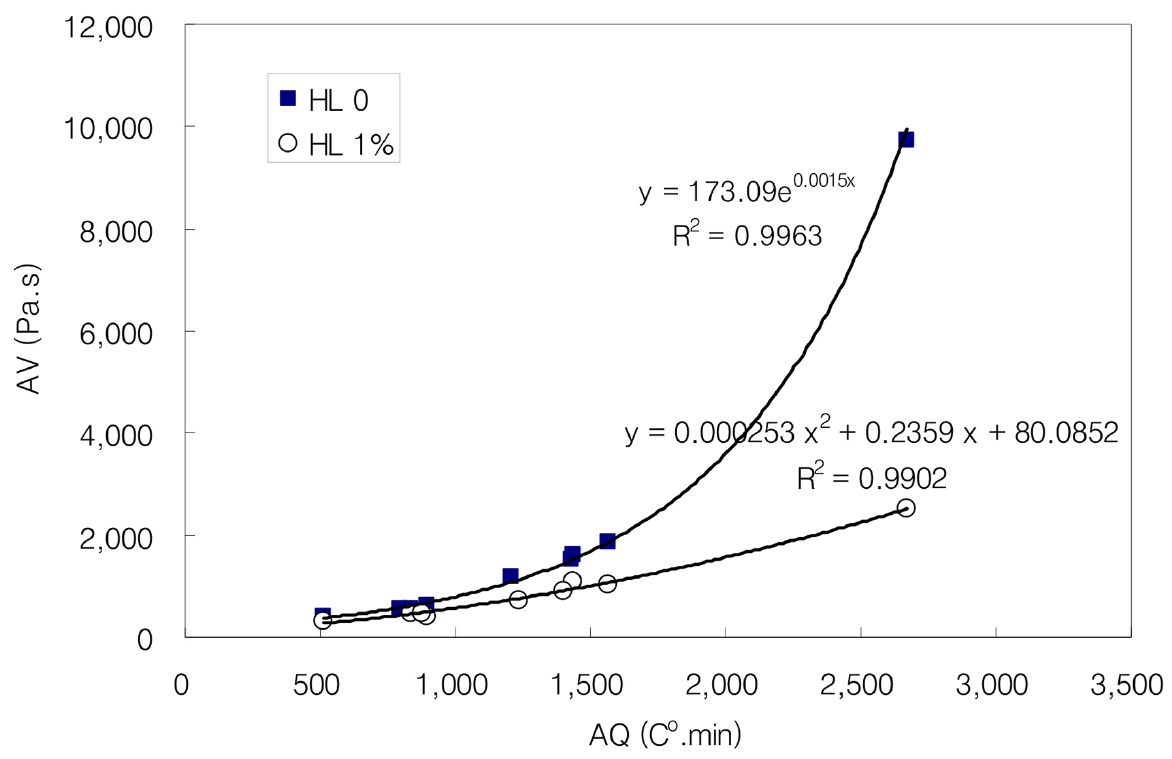
- This study was performed to compare binder’s absolute viscosity (AV) levels after short-term aging (STA) of two asphalt mixes with and without hydrated lime (HL). The AV was measured from the recovered binder, and the estimated AV (EAV) was computed by using the aging quantity (AQ) value assessed using STA temperature (T in °C) and time (t in min). The dense-graded asphalt (PG64-22) mixtures for surface course were prepared using two aggregates (granite and gneiss) with-and-without 1.0 wt% of HL in the lab. The mixes were conditioned for STA at two temperatures (160°C and 180°C) for three time periods (1 hour (h), 2 h and 4 h). The same type of field mixes, which were short-term aged in haul trucks, were randomly sampled at field site in late November. AV measured from recovered binders of 1/2 of mixes were used for regression, and the best-fit regression model for each mix was used to obtain the estimated AV (EAV) by AQ. Since the mix with HL was found to show lower AV than those without HL under the same STA condition, regression was separately carried out for HL 0 and HL 1% data. The AQ model, which was developed for quantifying agedness using T and t, was computed for each STA condition. The AV and AQ were used regression and the best fit model for each mix was used for EAV by AQ. Average R2 value of the regressions between EAV and AV by AQ model were 0.995. Therefore, AV of both mixes can be estimated by AQ model with a high reliability even though EAV and measured AV values with and without HL were found to be clearly different. - COLLAPSE
-
Estimation of binder agedness in asphalt mixtures with hydrated lime by AQ model

Journal Informaiton
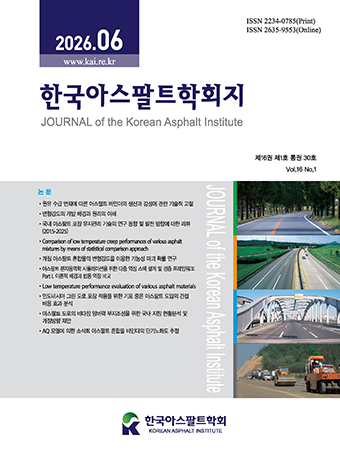 Journal of the Korean Asphalt Institute
Journal of the Korean Asphalt Institute






 KOREAN ASPHALT INSTITUTE
한국아스팔트학회
Room901, 38, Metapolis-ro, Hwaseong-si, Gyeonggi-do, Republic of Korea
Tel: +82-02-948-1268 / E-mail: asphaltinstitute@naver.com Copyright© KOREAN ASPHALT INSTITUTE. Powered by APUB
Tel: +82-02-948-1268 / E-mail: asphaltinstitute@naver.com Copyright© KOREAN ASPHALT INSTITUTE. Powered by APUB