


1. Introduction
2. Objection of this Research Paper
3. Background Information of KEC-AI Technology
4. Application of KEC-AI on Expressway Monitoring Procedure
5. Results of KEC-AI System
6. Summary and Conclusions
1. Introduction
Since 1950, the expressway in South Korea took a significant role not only in economic development bus also in cultural and spiritual development (MOLIT, 2019). The development of expressway in South Korea can be divided into two major phases (MOLIT, 2022): the first phase is building new roadway networks means an extension of expressway and the second phase is repairing and managing expressway in reasonable condition to obtain sustainable roadway network (KEC, 2021). The first phase of expressway was a major trend till late 1990s and the second phase was significantly considered after early 2,000s in South Korea (KEC, 2021). It is well known that optimized pavement thickness design skills and reliable construction technologies were considered to be a significant factor for expressway in South Korea till early 2,000 (Park et al., 2020). Remarkable length of expressway: averagely 150km per year, was constructed during this time (Park et al., 2020). This trend provided a huge network system of expressway in South Korea which led remarkable economic and cultural development (Park et al., 2020). It needs to be mentioned that along with extension of expressway, numbers of corresponding damages and distresses on expressway were found frequently due to various factors (e.g. poor material, wrong pavement thickness design and not proper construction condition etc.) (Seo et al., 2017). Because of this reason, a proper management and rehabilitation efforts of existing expressway rather than building new lanes became a crucial factor after 2,005 when total length of constructed expressway exceeded more than 3,000 km, approximately (Seo et al., 2017). Several efforts for expressway management were introduced and considered during this time. One of good examples for is rising of HPMS (i.e. Highway Pavement Management System) concept, trials and applications (Seo et al., 2017; Park et al., 2020). The HPMS means expressway surface management system consisted of three steps: the first step is surveying and analyzing pavement surface condition with sophisticated equipment, the second step is stocking and managing the huge amount of pavement monitoring DB (i.e. Data Base), the final step is deriving numerical, scientific pavement condition criteria by means of reasonable mathematical modeling work (Eum, 2016; Seo et al., 2017; Park et al., 2020). Among these three steps, the most crucial and basic factor is the first step: pavement surveying approach with professional measuring equipment (Eum, 2016; Seo et al., 2017; Park et al., 2020). All the collected DB, corresponding analysis results and mathematical models are totally dependent on the surveying results from the first step procedure (Eum, 2016; Seo et al., 2017; Park et al., 2020). The major considerations (and/or contents) on pavement at the first step procedures are presented in Table 1 (Eum, 2016; Seo et al., 2017; Park et al., 2020). Moreover, the equipment which can survey pavement surface condition and collecting related DB (i.e. mentioned in Table 1 previously) is shown in Fig. 1.
Table 1.
The major considerations on pavement at the first step in HPMS
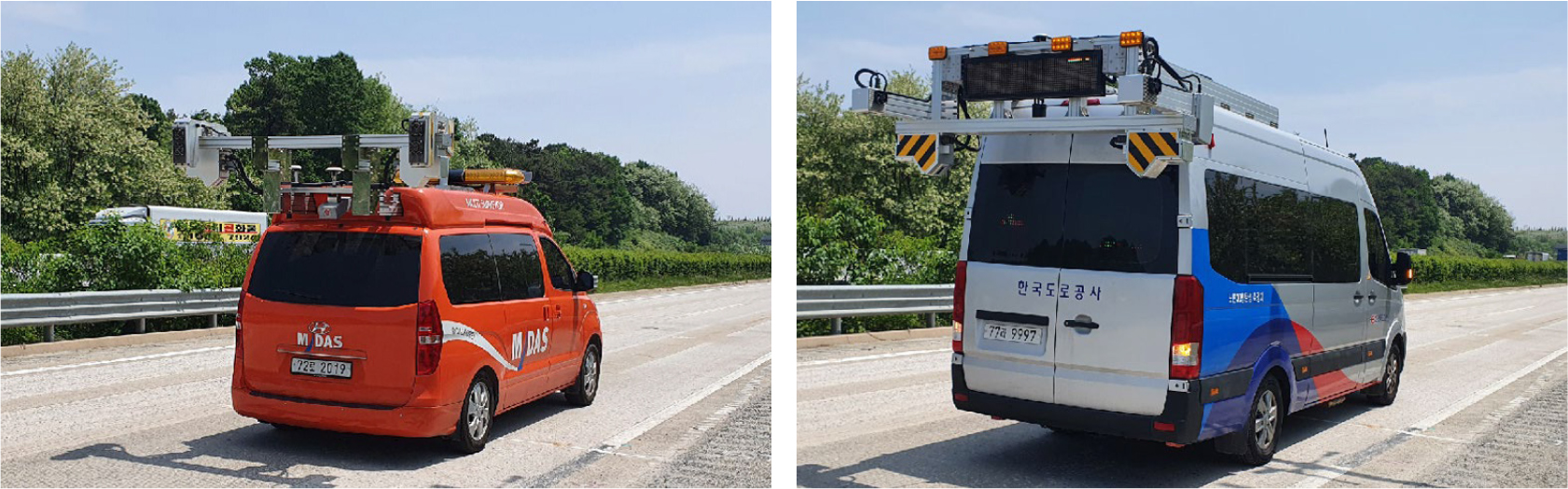
In HPMS, the most crucial challenge is: surveying and analyzing existing expressway surface condition with reasonable, reliable and efficient manner (Eum, 2016; Seo et al., 2017, Lim et al., 2020; Park et al., 2020). One of crucial considerations in analyzing step is: the major analyzing part is dependent on human efforts. This can cause two concerns: first, suspended analyzing time and secondly, burden of surveying budget increase due to lack of automated analysis system. Due to this reason, application of various advanced technologies on HPMS area were considered since early 2,010 (Eum, 2016; Lim et al., 2020). For the past decades, many advanced technologies such as AI (i.e. Artificial Intelligence) modeling approach and corresponding physical equipment were considered to be applied on expressway surface condition monitoring and analysis procedure (Gopalakrishnan et al., 2019; Younos et al., 2020; Zeiada et al., 2020; Cano-Ortiz et al., 2022). By applying AI technologies in HPMS business area, two major things can be achieved: first one is automated pavement surface monitoring work for efficiency and second one is saving current huge HPMS management budget through faster and more reliable surveying results. Moreover, converging IOT (i.e. Internet of Things) technology into current HPMS analyzing procedure is available by means of AI approach application. Therefore, application of AI technology in HPMS area is essential.
2. Objection of this Research Paper
In this paper, the feasibility of applying AI based pavement surface monitoring and analysis technology (and/or approach): originally developed in Korea Expressway Corporation Research Division (KECRD) was evaluated (i.e KEC-AI). To develop this automated AI based pavement surface condition analysis tool, several research efforts were performed as follows:
1) An extensive literature reviewing works were performed.
2) Prudent considerations on selecting model, analyzing method and image analysis techniques were considered.
3) Scientific and numerical evaluation criteria was selected. In this research, confusion matrix concept was considered.
4) Several trials and error procedures were performed to increase the accuracy of developed KEC-AI technology for more reliable achievements.
More detailed information about the AI pavement analysis approach is mentioned in the next section of this paper.
3. Background Information of KEC-AI Technology
In HPMS, three pavement distress: Surface Damage (SD), Rutting Depth (i.e. RD), International Roughness Index (i.e. IRI), are monitored (and/or surveyed) by professional equipment (see Fig. 1). In AI analysis technology, only SD is considered due to efforts based on manpower analysis are applied in quantifying SD level (Eum, 2016; Seo et al., 2017; Park et al., 2020, see Table 2).
Table 2.
Major HPMS surveying components and corresponding analysis procedure
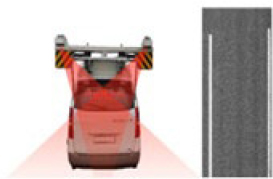
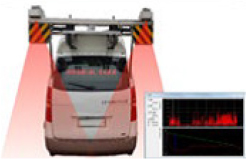
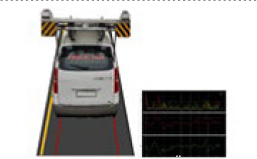
The core element of KEC-AI technology in pavement is: selection of proper machine learning model and setting corresponding evaluation criteria.
In this paper, U-Net model: a practical Artificial Nural Network (ANN) model, was selected and applied (Eum, 2016; Seo et al., 2017; Park et al., 2020). The U-NET model is widely applied for image analysis procedure. This model considers a small elegant model rather than using fully convolutional network. The major advantages of U-Net model are: first localization is available and more learning data can easily be acquired. However, the drawbacks of U-Net model is: the processing procedure is slow and requires more learning data set. The U-Net model in KEC-AI works as following 4-steps. More detailed information is presented in Table 3.
Table 3.
U-Net analysis procedure in KEC-AI
On the behalf of setting evaluation criteria setting area, confusion matric concept was considered (Gopalakrishnan et al., 2019; Younos et al., 2020; Zeiada et al., 2020; Cano-Ortiz et al., 2022). For detailed evaluation index, 4 components: accuracy, precision, recall and F1-score, were selected. More detailed information is shown in Tables 4 and 5.
Table 4.
The confusion matrix analysis sample in KEC-AI
| Confusion matrix | Labeled as | |||
| Positive | Negative | |||
| Predicted as | Positive | TP (True Positive) | FP (False Positive) | |
| Negative | FN (False Negative) | TN (True Negative) | ||
In Table 5, the final result: F1-Score, is the major indicator for verifying feasibility of developed KEC-AI technology. In the previous study, it was mentioned that reliable prediction results can be derived if the computed final F1-Socre is more than 50%.
Based on the information from Tables 4 and 5, the originally developed KEC-AI technology was evaluated to provide reliable prediction performance. The detailed information is shown in the next section in this paper.
4. Application of KEC-AI on Expressway Monitoring Procedure
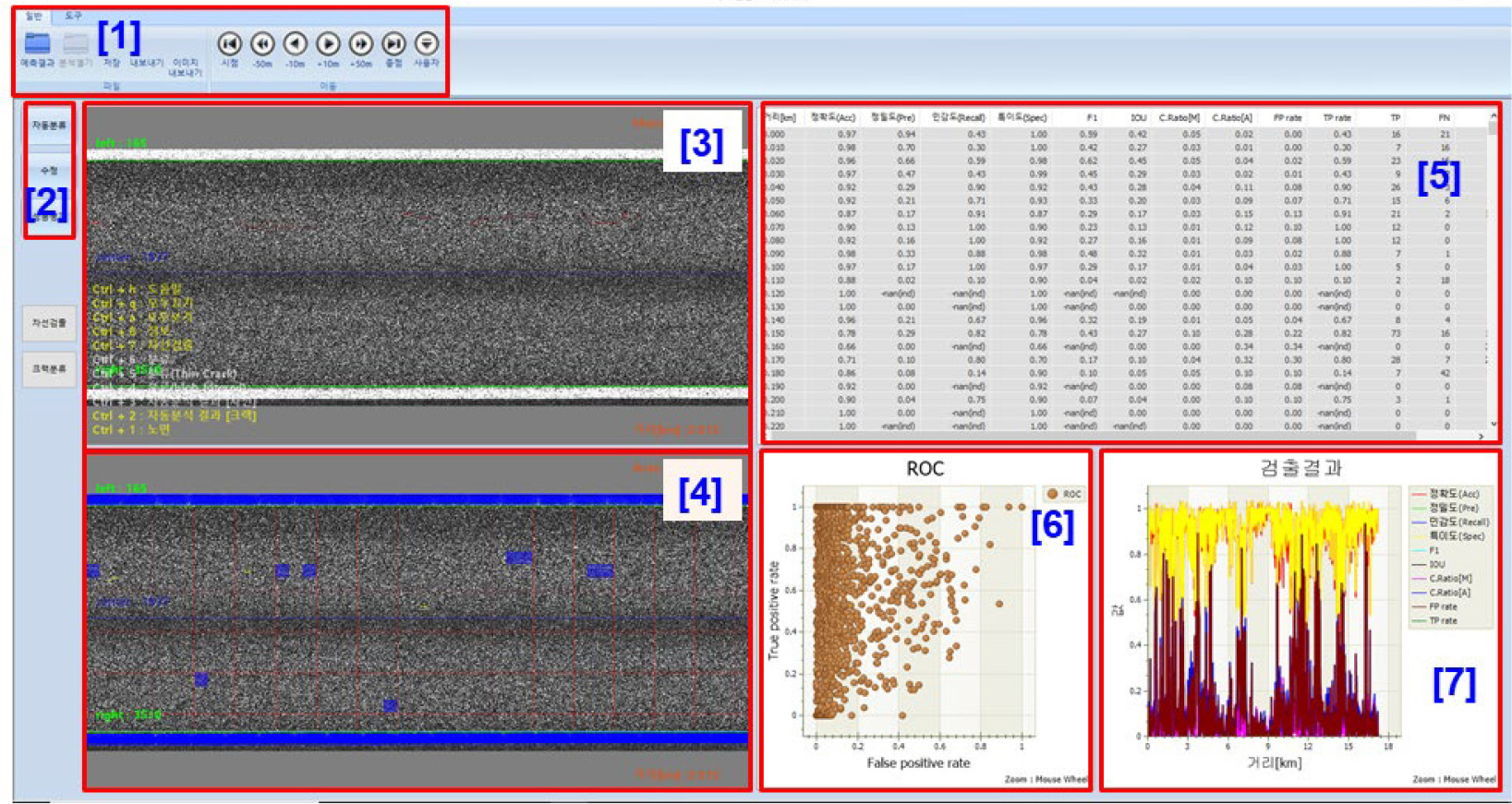
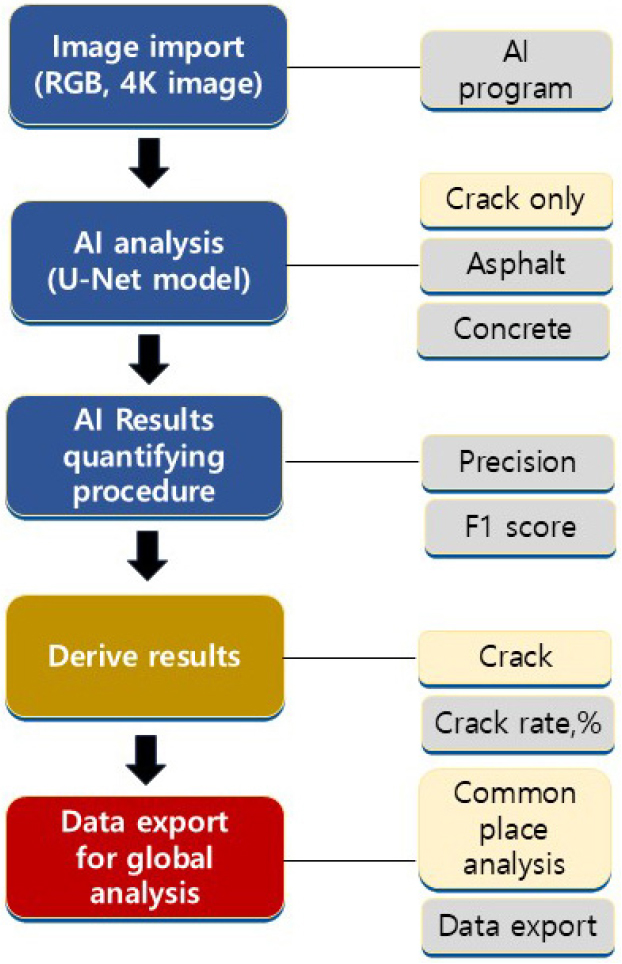
To make KEC-AI technology into more reliable pavement crack prediction and analysis tool, several trial and error was considered. Detailed information is shown in Table 6. Moreover, the sample analysis picture (i.e. AI analysis platform) is shown in Fig. 2. Moreover, the AI analysis flow chart is presented in Fig. 3.
The KEC-AI technology was revised 2 times to improve the prediction and analysis quality (see Tables 4, 5). The detailed information is presented in the next section.
Table 6.
Efforts to improve prediction quality of KEC-AI
5. Results of KEC-AI System
From the activities mentioned in the previous section (see Table 6 and Figs. 2 and 3), reasonable and reliable prediction results were derived from KEC-AI. The sample analysis results are shown in Figs. 4 to 5 and Table 7, respectively.
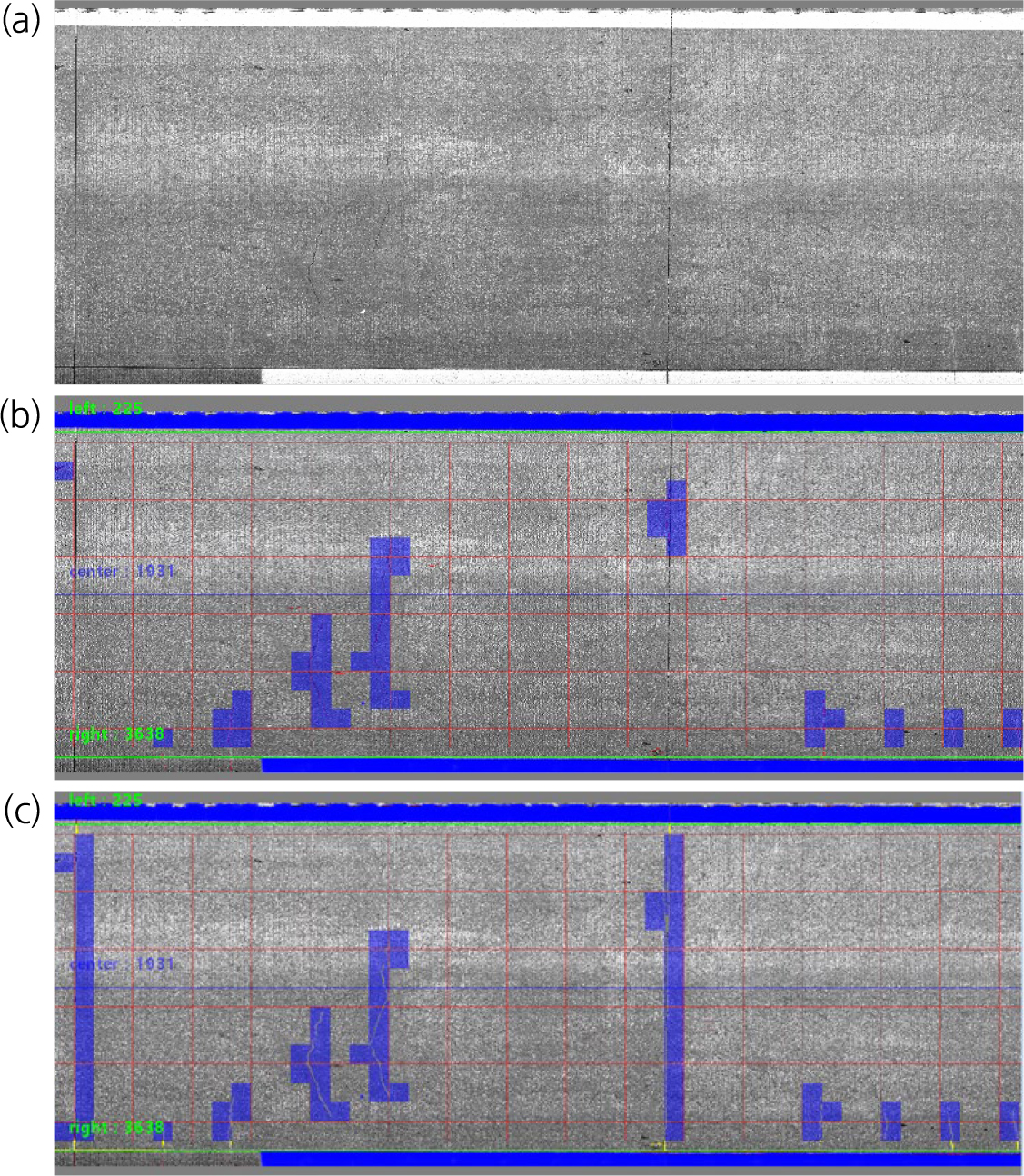
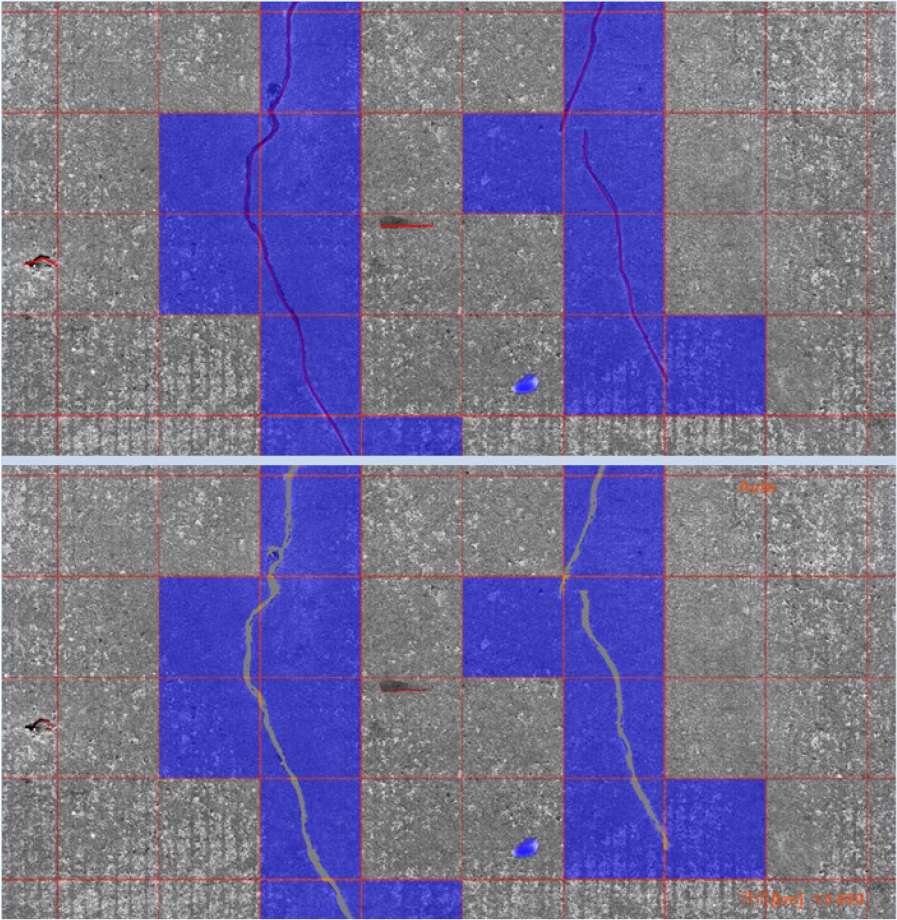
Table 7.
KEC-AI computation results
From the results above, it can be concluded that newly developed KEC-AI can successfully be applied in HPMS business area. An extensive works: performing more learning procedure and increasing F1-Score value, are needed as future research contents. However, this KEC-AI technology can be a milestone for making roadway management area into a new advanced level.
6. Summary and Conclusions
In this paper, the feasibility of applying AI based pavement surface monitoring and analysis technology was evaluated. As a result, AI based pavement surface monitoring and analysis tool provided a reasonable and reliable results compared to the conventional analysis approach. This finding provides a promising signal that more AI based technologies can successfully applied in HPMS business area in the next future.