


1. Introduction
2. Mechansim Modification
3. Testing
3.1 Materials and testing equipments
3.2 Test procedures
3.3 Waterborne epoxy modified emulsion asphalt performance test
4. Results with analysis
4.1 Waterborne epoxy modified emulsified asphalt physical performance analysis
4.2 Infrared spectrum analysis
4.3 DSC analysis
4.4 TG analysis
5. Construction application
5.1 Description of Project
5.2 Application
5.3 Pavement surface evaluation
6. Conclusion
1. Introduction
Emulsified asphalt has been widely in use globally for pavement maintenances with different technologies such as fog seal, slurry seal, micro surface seal etc. Having the great benefits in environmental friendly, energy saving, convenient work process and more.
However, general emulsified asphalt having disadvantages characteristics of low bonding strength, poor performance with high and low temperatures, insufficient strength, rapid aging and instability. Therefore an urgent needs to resolve the adhesion strength, stability and high/low temperature performances of the modified emulsified asphalt.
The water based epoxy cured at room temperature produced high temperature resistance, high adhesion strength, low shrinkage, high anti-deformation, with good mixing stability when mixed with emulsion asphalt. Therefore water based epoxy modified emulsion asphalt in use to make up the general emulsified asphalt disadvantages such as poor adhesion strength, low strength with poor performances in high and low temperatures. With important research value and development, significantly improvement in pavement surface maintenances technology.
The study with mixture of different ratio of waterborne epoxy added to emulsified asphalt . Performance testing inclusive of basic tests such as hardness test, bonding strength, stripping test, flexibility, impact resistance, High and low temperature resistance, pull out strength test when applied to cement concrete and asphalt concrete. Determine the best amount of waterborne epoxy should be added. Simultaneously using infrared spectroscopy, DSC calorimetric for thermo differential, TG thermo gravimetric. Determine the structure characteristics of waterborne modified emulsified asphalt.
With the support of the study prepared anti-skid composite sealing materials with the waterborne epoxy modified emulsion asphalt acting as the main adhesions combined with selected high anti-skid aggregates. Providing pavement surface with seal filling effects, strengthening surface overlay by bonding the loose aggregates together. Improve surface skid resistance, enhancing surface water proofing. The high permeability characteristic increase the working efficiency/ The high bonding strength with high abrasion resistance prolonged the pavement lifespan.
2. Mechansim Modification
When Emulsified asphalt combined with waterborne epoxy, the reactive mechanism effect and the self emulsion of the two substances molecules, interleaved to form physical cross links. In additional to the physical bond cross linking, it also with chemical bonding. The chemical bond cross linking is greater than the physical cross linking. The physical cross link with different form of cross linking, in general differentiated as positive or negative crosslink. The dead node cross linking energy is greater than the active node cross linking. The inter molecules energy is one tenth of the chemical bond but with multiple active node superimposed on each other, the effects are significant. After the cross linking process, the epoxy macromolecules and the asphalt small molecules integrated cross linked together to form a complete one whole network. Transforming the thermoplastic asphalt materials into thermosetting composite materials. At the same time enhanced the flexibility of epoxy. Compared with pure epoxy molecular network or pure asphalt colloidal structure. This overall network structural with higher resistance to external forces, the strong epoxy cross linking effects enhanced the durability of modified emulsified asphalt. Waterborne emulsified asphalt with strong bonding strength, good cross linking networks, allow it with good high temperature stability and low temperature cracking resistance.
3. Testing
3.1 Materials and testing equipments
3.1.1 Main materials
Waterborne Epoxy : solid content 50~52%, epoxy value 0.23~0.25 mol/100 g Nonionic water based epoxy eumuslsion,manufacturer by Taiyuan Robon.
Waterborne curing agent : solid conten 50~52%, amine value 0.22~0.24 mol/100 g modified tetraethylenepentamine water based epoxy curing agent, manufacturer by Taiyuan Robon.
Eumusified asphalt : solid conten 50~52%, cationic eumlusion asphalt
3.1.2 Testing equipments
British Pendulum skid tester (QHB), Electrical coating adhesions tester (QFD), Coating Impact tester (QCJ-50/100), Coating elasticity tester (QTX), UTM ETM504C, 30KN), Infrared Spectrometer (FITR8400), Thermo Calorimeter (DSC-6), Thermo gravity tester (TG209F3).
3.2 Test procedures
3.2.1 Preparation of waterborne epoxy modified emulsified asphalt
Well mixed the cationic emulsified asphalt with waterborne emulsion epoxy, adding design ratio of waterborne curing agent. Waterborne epoxy modified emulsion asphalt created after mixed the material evenly. Waterborne epoxy ration volume as 15%, 25%, 30% and 50%, with their respective physical properties combined with anti-skid sealing composite materials performance requirement to determine the best ration of waterborne epoxy to be added.
3.2.2 Preparation of anti-skid composite seal coating test sample
After mixed the appropriate volume of waterborne epoxy with the emulsified asphalt, applied evenly onto the slab samples according to volume and design for pavement construction,follow by applying the appropriate designed amount of anti skid aggregate and allow it to be cured.
3.3 Waterborne epoxy modified emulsion asphalt performance test
Accordance to Chinese test standard and protocol, GB/T1720, GB/T1730, GB/T1731, GB/T1732, GB/T1733, GB/T1735, DL/T5193, JTJ 052 to determine the bonding strength, hardness, flexibility, impact resistance, water resistance, Heat resistance, pull out strength and stripping or peeling strength.
4. Results with analysis
4.1 Waterborne epoxy modified emulsified asphalt physical performance analysis
Testing for it adhesion strength, harness, flexibility, impact resistance, water & heat resistance. Comparing with pure epoxy and non modified emulsion asphalt. The physical performance properties of modified emulsion asphalt mixed with different volume of waterborne epoxy Table 1.
Table 1.
Physical properties of emulsified asphalt modified with different ratio of waterborne epoxy (P.E asphalt : Pure Emulsified Asphalt, P Epoxy : Pure Epoxy)
Refer to Table 1, When different amount of waterborne epoxy added to emusion asphalt, it physical properties changed.With higher ratio of waterborne epoxy, the harness, adhesion strength, stripping resistance and bonding strengths increase .Significant improve in heat and freez-thaw resistance. But when the volume ration of epoxy to 50%, the modified emulsified asphalt impact resistance reduced because when with too high ratio of waterborne epoxy, the asphalt bitterness at room temperature increased. The test results show with 30% waterborne epoxy added is optimal amount.
4.2 Infrared spectrum analysis
4.2.1 Introduction of Infrared Spectroscopy
In the form of organic molecules, composite into chemically atoms bond or the atoms energy in a state of constant vibration, it vibration frequencies comparable with the infrared rays vibration frequencies. There fore when irradiating organic molecues with infrared, the molecules chemical boning during vibration absorption. Different chemical bonding functional groups have different vibration absortion frequencies. Under the infrared spectrum will be in different positions, allow it determine the different type of chemical bonds and functional group informations.
4.2.2 Result analysis
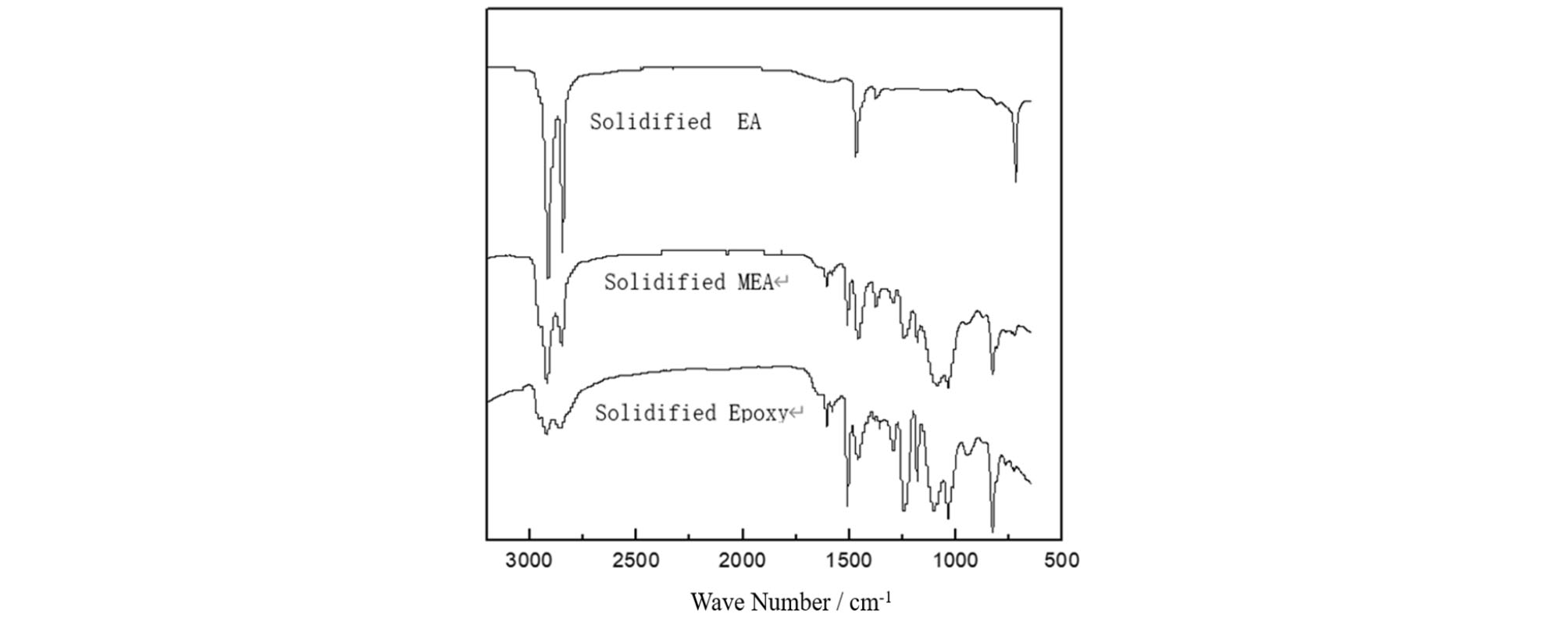
Fig. 1 shown, Between the waterborne epoxy and emulsion asphalt, intermolecular formed modified their chemical and physical properties. Wave numbers 1606 cm-1, 1581 cm-1, 1508 cm-1 shown characteristic of the absorption peak of cured epoxy. 1376 cm-1, 718 cm-1 with characteristic of the absorption peak of asphalt. It show both ideally composite hybridization. (EA : Emulsified asphalt, MEA : Modified emulsified asphalt, WBE: Waterborne epoxy).
4.3 DSC analysis
4.3.1 DSC method
DSC (Differential Scanning Calorimeter), thermal analysis, under temperature controls determine co relationship between sample performance and temperature. The sample heat absorption and exothermic, thermal flow as standard with temperature T or time t as abscissa, measure various thermodynamic and kinetic parameters such as heat capacity, heat reaction, heat transformation, phase diagram, reaction rate, crystallization rate, polymer crystalline rate. Temperature range (-175~725°C, high resolution, using less samples, suitable for inorganic, organic compound and drugs analysis.
4.3.2 DSC test result analysis
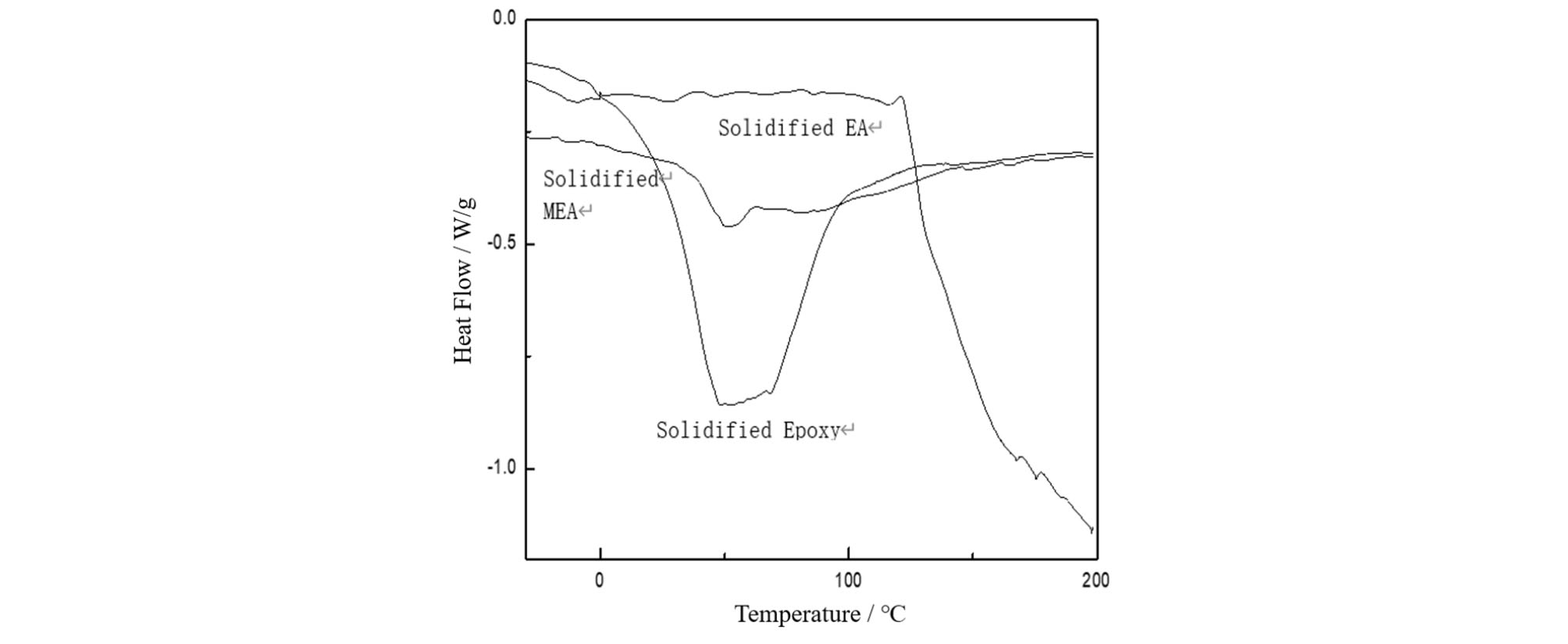
Fig. 2 when solidified emulsified asphalt temperature increased from -30°C to 200°C, DSC curves with great fluctuation. Since asphalt structures is complicated when temperature increased with heat absorption it undergo endothermic changes. Mutation at 120°C, turned into flow dynamic and remain unchanged up to 200°C. When emulsified asphalt modified by waterborne epoxy, it DSC curves with big different from emulsion asphalt before modification. When temperature increased from -30°C to 200°C, at around 40°C with endothermic phenomenon. Cured epoxy with phase transition when further increased temperature the modified asphalt do not appear the viscous flow state of pure asphalt. It obvious waterborne epoxy improve the heat resistance of emulsion asphalt after modification.
4.4 TG analysis
4.4.1 TG method
(Thermogravimetric Analysis, TG or TGA) under controlled temperature measuring the quality and temeparure changes of sample to determine the thermal stability. TG analysis study changes in crystal properties such as melting, evaporation, sublimation and adhesions material physical properties. Studied the material thermal stability, decomposition process, dehydration, dissociation, oxidization, restore, quantitative analysis, effective of additive and filler, moisture content and volatise, kinetic reaction and other chemical phonmon.
4.4.2 TG analysis
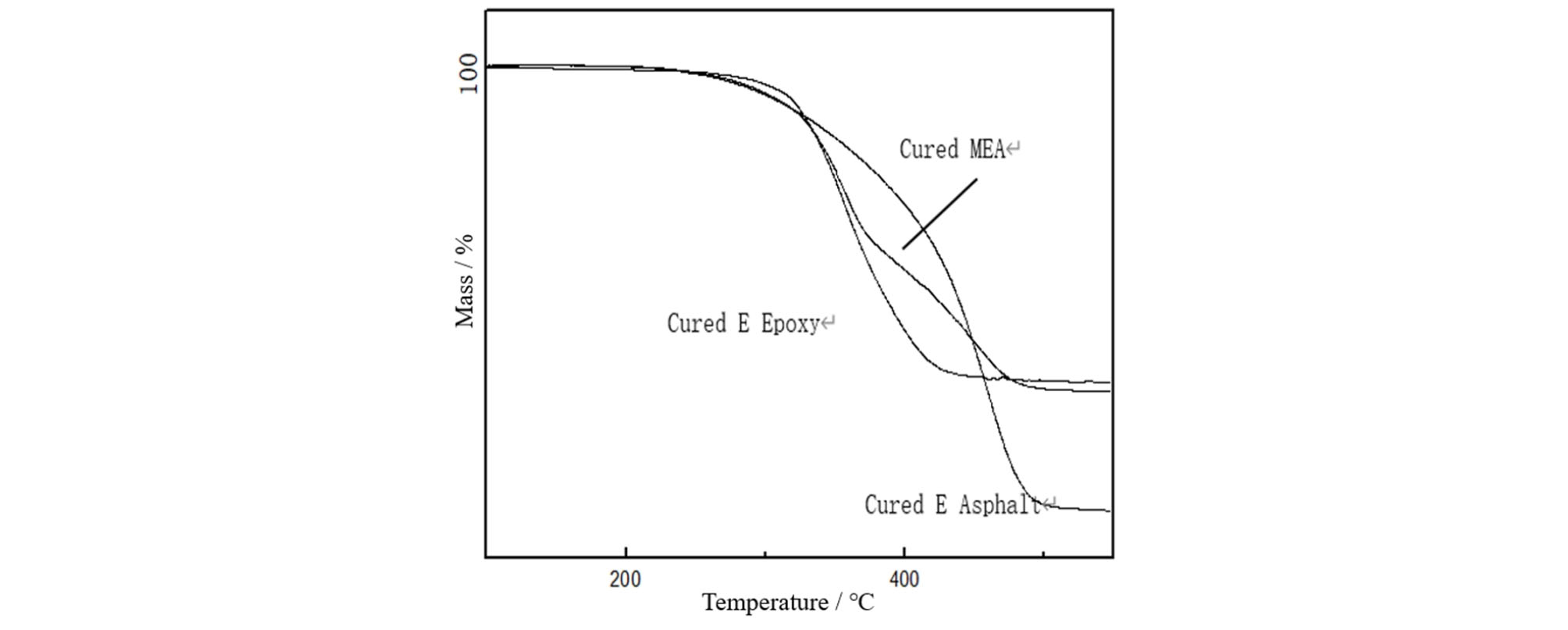
Fig. 3 The initial decomposition temperature for cured emulsified epoxy is 200°C, 1% weight lost decomposition about 247°C; The cured emulsified asphalt initial decomposition temperature at 175°C, 1% weight lost decomposition at 238°C; The cured epoxy modified emulsified asphalt initial decomposition temperature at 197°C, 1% weight lost decomposition at 241°C. It shown the emulsion asphalt after modified by waterborne epoxy, it heat resistance improved.
5. Construction application
5.1 Description of Project
Heyu-Highway is asphalt concrete pavement, after years of high load stress, some area surface with moderate defects mainly with transverse and longitudinal cracks and some area with alligator cracks. With obvious early surface cracks and defects, the pavement surface were badly polished. Partial surface suffering from peeling and stripping. The skid resistance greatly reduced and badly affected the pavement overall aesthetic. Project application at Heyu-Highway road section K74+300~K73+700. Fig. 4 is pavement surface close shot after construction of the HFST method. Fig. 5 is a photo after 1 year of the HFST construction.


5.2 Application
The coating construction method applied according to specify conditions of the road surface, the pavement surface is cleaned and micro texture reconstructed by shot blast process. After Shot Blast process, the surface coated with anti skid composite seal process. Aggregate and waterborne epoxy modified asphalt distributed evenly at the same time onto the surface, this process achieved by digital automated controlled system.
The cured pavement surface with High friction surface treatment allow the pavement look like new with the performances of anti-skid, anti-water and corrosion, anti fire etc. A comprehensive surface protection achieved. Fig. 6 is the construction process, and Fig. 7 is the road immediately after construction is completed.


5.3 Pavement surface evaluation
Refer to Table 2, original pavement with poor skid resistance around 36 PBN, after constructed with anti skid composite seal coating the skid resistance increased to 76 BPN or more.Retest conducted after one year, the skid resistance maintained around 65 BPN. The sturcture depth test method was followed JTG B012014. The surface microstructures significantly increased without affecting the original pavement surface elevation. Heyu-Highway project completed in May 2018 and retest conducted in July 2019. During this period zero accident. The High friction surface treatment construction cost is not high, with digital automation construction process speedily improve pavement surface performances and drive comfort. The seal coating is environmental friendly since an ECO materials it also harmless to work crews and other road users.
Table 2.
Heyu Highway pavement performances analysis
6. Conclusion
1.After physical performance comparison tests with waterborne modified emulsified asphalt for it adhesion strength, hardness, flexibility, impact resistance, water resistance, heat resistance. Determine the specify best performances of anti-skid composite coating materials when with 30% of waterborne epoxy added to the emulsion asphalt.
2.With additive of 30% waterborne epoxy, the modified emulsion asphalt with significant improvement in it hardness, adhesion strength, bonding strength, stripping resistance, flexibility at low temperature, heat resistance and freeze thaw resistance.
3.With DSC and TG test analysis it proven the modified emulsion asphalt with better heat resistance.
4.The field testing for Heyu Highway project proven when applied anti-skid composite coating with waterborne epoxy modified emulsified asphalt. The pavement surface skid resistance significantly increased to 76 BPN, doubled the original skid value enhanced the safety of road users. After application for one year the surface skid value remain around 65.